Have you ever stopped while writing because you could not decide whether to use judgements or judgments? Many students, writers, editors, professionals, and even native English speakers face this common spelling confusion.
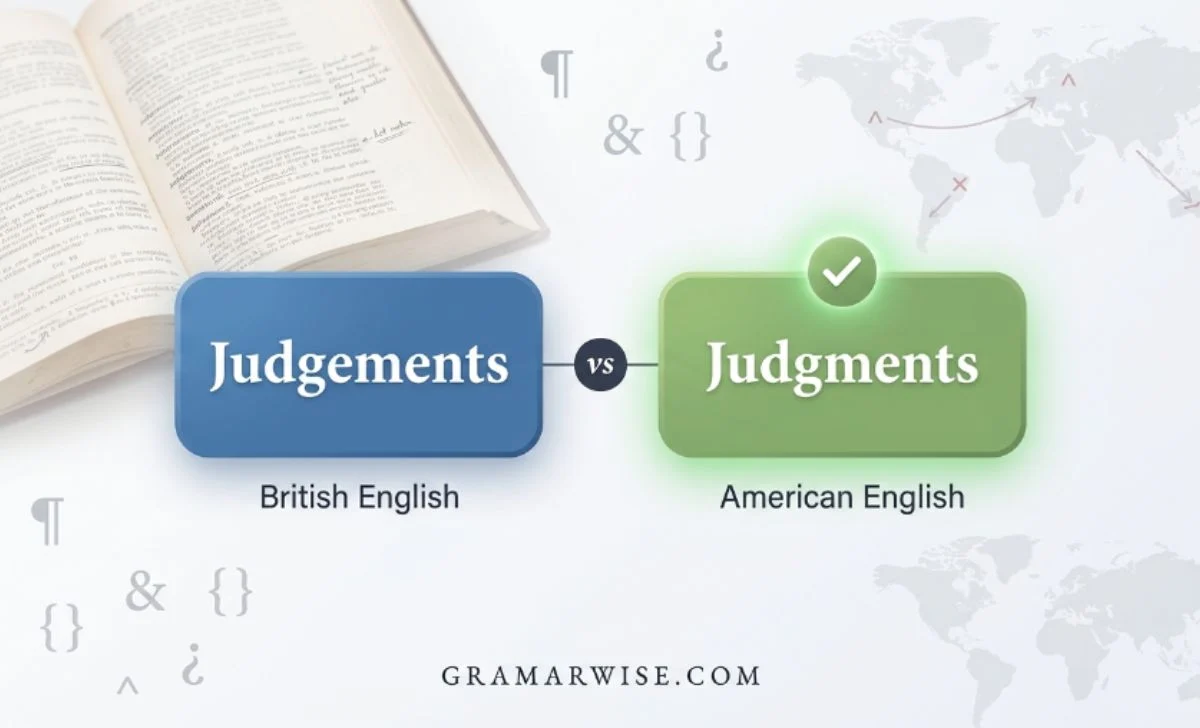
The reason is simple: both spellings are correct, but each belongs to a different variety of English. Judgments is the preferred spelling in American English, while judgements is more common in British English.
Choosing the right version helps your writing appear accurate, professional, and consistent. In this guide, you will learn the meaning of both spellings, their history, regional differences, grammar rules, sentence examples, and practical writing tips. By the end, you will confidently know which spelling to use in every situation.
Judgements or Judgments – Quick Answer
The short answer is simple: both “judgements” and “judgments” are correct spellings, but they belong to different varieties of English.
Judgments is the standard spelling in American English. It is also the preferred spelling in most legal documents, court decisions, and style guides, including AP Style. If you are writing for readers in the United States, this is the spelling you should use.
Judgements is more common in British English and appears in many UK publications, educational materials, and general writing.
Although some British dictionaries also accept judgment, judgement remains a familiar spelling for many British writers.
The meaning does not change. Both words refer to opinions, decisions, or the ability to make sensible choices.
Correct Example
✔ The court delivered its judgments on Friday. (American English)
✔ The teacher shared her judgements about each student’s progress. (British English)
✔ Good judgment is important when making financial decisions.
✔ Her judgement impressed everyone in the meeting.
Incorrect Example
✘ The company published its judgements in an American legal report. (Use judgments instead.)
✘ The newspaper followed AP Style but wrote judgement throughout the article. (AP Style recommends judgment.)
✘ Mixing judgements and judgments within the same document. (Choose one spelling and stay consistent.)
What Do Judgements and Judgments Mean?
Both judgements and judgments have exactly the same meaning. The only real difference is spelling.
Whether you use the British or American form, the word refers to an opinion, a decision, or the ability to evaluate situations wisely.
The word is commonly used to describe an opinion, a decision, or the ability to think carefully.
In legal writing, it refers to an official court decision, while in everyday communication, it often means making sensible choices.
Meaning of Judgment
Judgment is the preferred American English spelling. It can mean:
- A decision made after careful thought.
- A formal decision given by a judge or court.
- The ability to make wise choices.
- An opinion formed about someone or something.
Examples:
- She showed excellent judgment during the emergency.
- The judge announced the final judgment in court.
- Good judgment helps leaders solve problems.
Meaning of Judgement
Judgement carries the same definitions but is more commonly used in British English.
Examples:
- His judgement was respected by the entire team.
- The court published several important judgements this week.
- Trust your own judgement before making a decision.
Are They Different?
No. There is no difference in meaning between judgements and judgments. The distinction is based on regional spelling rather than grammar or definition.
A simple way to remember is:
| Region | Preferred Spelling |
|---|---|
| United States | Judgments |
| United Kingdom | Judgements (Judgment is also accepted in many contexts) |
| Canada | Both are used, depending on the publication or style guide |
| Australia | Judgements is more common |
As long as you choose the spelling that matches your audience and remain consistent throughout your writing, either form is correct.
Why Are There Two Spellings?
Many English words have different spellings because the language developed in different regions over hundreds of years.
Judgements and judgments are a perfect example. Both forms come from the same word and carry the same meaning, but their spelling changed as British and American English evolved.
Today, judgment is the standard spelling in American English, while judgement remains common in British English, especially in general writing. However, many British publishers, dictionaries, and legal institutions also use judgment, which makes the difference even more confusing.
Word History
The word judgment comes from the Old French word jugement, which itself came from the Latin word judicium, meaning decision, opinion, or legal ruling.
During the Middle Ages, English spelling was not standardized. Writers often spelled the same word in different ways.
As English developed, both judgment and judgement appeared in books, legal documents, and literature.
In the 18th and 19th centuries, spelling became more standardized. American English gradually adopted judgment as the preferred form, while British English continued using judgement in many contexts.
Why “Judgment” Lost the Letter “E”
Many people wonder why judgment is spelled without the letter e after g.
The answer lies in historical spelling conventions. Although the base word is judge, English does not always keep every letter when adding a suffix. Similar spelling changes happen in words like:
- acknowledge → acknowledgment
- abridge → abridgment
As American English became more standardized, dictionaries and style guides favored the shorter spelling judgment. Over time, it became the accepted form in schools, publishing, journalism, and legal writing across the United States.
British English, however, continued to accept judgement, so both spellings remained in use internationally.
Why the Confusion Happens
People often become confused because they see both spellings online, in books, and in official documents.
Several factors contribute to this confusion:
- British English commonly uses judgement, while American English prefers judgment.
- Some British dictionaries list judgment as an accepted spelling.
- Legal writing in many English-speaking countries often uses judgment, regardless of regional spelling.
- Search engines display results for both versions because they have the same meaning.
- Writers frequently read content from different countries, leading to mixed spelling habits.
The safest approach is to match the spelling to your audience and stay consistent throughout your document.
British English vs American English
The biggest difference between judgements and judgments is regional spelling preference rather than meaning.
In American English, judgment is considered the standard spelling in schools, universities, newspapers, business communication, and legal writing.
In British English, judgement is still widely used in general writing. However, many respected British organizations and legal publications also use judgment, especially in formal or legal contexts.
Because of this overlap, readers may encounter both spellings even within the United Kingdom.
Comparison Table
| Feature | British English | American English |
|---|---|---|
| Preferred singular | Judgement | Judgment |
| Preferred plural | Judgements | Judgments |
| Meaning | Opinion, decision, legal ruling | Opinion, decision, legal ruling |
| Legal writing | Often Judgment | Judgment |
| Newspapers | Mostly Judgement | Judgment |
| Schools & Universities | Judgement commonly taught | Judgment taught as standard |
| Official Style | Varies by publisher | Judgment is standard |
Oxford Dictionary Recommendation
The Oxford English Dictionary recognizes both spellings.
In modern British English, judgement is still common in everyday writing. However, Oxford also accepts judgment, particularly in legal contexts and certain formal publications.
This means British writers have some flexibility, although consistency is still important.
AP Style Recommendation
If you write for newspapers, magazines, or online journalism that follows AP Style, always use judgment.
The Associated Press Stylebook recommends judgment without the extra e. This rule applies even if the article discusses British English.
For journalists and content writers targeting an American audience, judgment is the correct choice.
Legal Writing and Court Usage
Legal English follows its own conventions.
Many courts, law firms, and legal publishers use judgment regardless of whether they operate in the United States or the United Kingdom.
Court decisions, legal rulings, and official documents frequently prefer this spelling because it has become the standard legal form.
Examples include:
- The judge issued the final judgment yesterday.
- The court published several important judgments this month.
- Lawyers carefully reviewed the court’s judgment before filing an appeal.
If you are preparing legal documents, using judgment is generally the safest and most widely accepted choice.
Judgements vs Judgments Comparison Table
Although judgements and judgments have the same meaning, choosing the right spelling depends on your audience. The table below makes the difference easy to understand.
Spelling Comparison Table
| Feature | Judgements | Judgments |
|---|---|---|
| Spelling Status | Correct | Correct |
| English Variety | British English | American English |
| Meaning | Opinions, decisions, legal rulings | Opinions, decisions, legal rulings |
| Legal Usage | Less common in legal writing | Standard legal spelling |
| AP Style | Not preferred | Preferred |
| Everyday UK Writing | Common | Also accepted |
| Everyday US Writing | Rare | Standard |
| Academic Writing | Depends on institution | Preferred in US institutions |
| Best For | UK readers | US readers |
The easiest way to choose is to think about your audience. If your readers are mainly in the United States, write judgments.
If they are in the United Kingdom, judgements is generally more familiar, although judgment is also widely accepted in formal contexts.
Which Spelling Should You Use?
There is no single spelling that is correct for every situation. Instead, use the version that matches your readers and the writing style you are following.
United States
If you are writing for an American audience, always use judgment and judgments.
This spelling appears in:
- Schools and universities
- Newspapers
- Government publications
- Business documents
- Professional websites
- Legal documents
Examples:
- Good judgment comes with experience.
- The court delivered its final judgments.
United Kingdom
British writers commonly use judgement and judgements in general writing.
However, many British legal documents and publishers also use judgment, so do not be surprised if you see both spellings.
Examples:
- Her judgement was fair and balanced.
- The committee made several important judgements.
Canada and Australia
Canadian and Australian English often follow British spelling traditions, but American spelling also appears in international publications.
For consistency:
- Follow the style guide used by your school, employer, or publisher.
- Avoid mixing both spellings in the same document.
Academic Writing
Academic writing values consistency more than personal preference.
Before submitting an essay or research paper:
- Check your university’s style guide.
- Follow the required English variety.
- Keep the same spelling throughout the document.
Whether you choose judgements or judgments, changing between the two may reduce the professionalism of your work.
Business and Professional Writing
Business communication should match the location of your clients or company.
For example:
- A US company should write judgment.
- A UK company may prefer judgement.
- International companies should follow one editorial style across all documents.
Consistent spelling creates a more professional impression.
Social Media and Online Content
Social media allows more flexibility, but consistency still matters.
If your audience is mostly American, use judgment.
If your audience is mainly British, judgement will feel more natural.
For global websites, choose one spelling and use it throughout every page, blog post, and marketing campaign.
Why Is “Judgment” Spelled Without an “E”?
Many writers notice that the base word is judge, so they expect the noun to become judgement. However, English spelling does not always keep every letter when a suffix is added.
The spelling judgment has been accepted for centuries and eventually became the standard form in American English.
Historical Reason
Earlier English texts contained both judgment and judgement. There was no universal spelling because English had not yet been standardized.
As dictionaries and grammar guides developed, publishers chose different forms.
American English eventually standardized judgment, while British English continued using judgement alongside judgment.
Modern English Usage
Today, both spellings are correct.
The difference is based on regional preference rather than grammar.
Modern style guides recommend:
- Judgment for American English.
- Judgement for most British general writing.
- Follow one spelling consistently.
Legal English Preference
Legal English strongly favors judgment.
Court rulings, judicial opinions, legal textbooks, and official case documents usually use judgment, even in countries where judgement is common in everyday writing.
For example:
- The judge entered a final judgment.
- The appellate court reviewed the previous judgment.
- The written judgment explained the court’s decision.
If your writing relates to law, using judgment is generally the safest option.
Common Mistakes with Judgements and Judgments
Many writers know that both spellings exist, but they still make avoidable mistakes. Most errors happen because British and American spelling rules are mixed within the same document.
Frequent Errors
Some of the most common mistakes include:
- Using judgements in an American English article.
- Using judgments in one paragraph and judgements in the next.
- Assuming one spelling is always wrong.
- Ignoring the style guide required by a school, publisher, or employer.
- Using judgement in AP Style articles.
Corrected Examples
| Incorrect | Correct |
|---|---|
| The American court published several judgements. | The American court published several judgments. |
| Her judgement was excellent. (US English) | Her judgment was excellent. |
| The UK newspaper used judgments and judgements together. | Use one spelling consistently throughout the article. |
| AP Style recommends judgement. | AP Style recommends judgment. |
| This legal judgement was appealed. | This legal judgment was appealed. |
By avoiding these mistakes and staying consistent, your writing will look more accurate, professional, and easier for readers to trust.
Judgements and Judgments in Everyday Writing
Knowing the difference between judgements and judgments is helpful, but using the correct spelling in real situations is even more important.
The examples below show which spelling fits different types of writing.
Emails
Choose the spelling based on your audience.
American English
Thank you for your professional judgment on this proposal.
Your judgment helped us reach the right decision.
British English
Thank you for sharing your judgement on the report.
Your judgements were valuable during the review process.
School Writing
Students should follow the spelling style required by their school or university.
Examples
- Good judgment is an important leadership skill. (US English)
- Careful judgement helps students make better decisions. (UK English)
Business Writing
Professional documents should use one spelling consistently.
Examples
- The manager relied on her judgment before approving the project.
- The director respected the team’s judgement throughout the meeting.
News Writing
Most newspapers follow an editorial style guide.
Examples
- The Supreme Court released its final judgment today.
- Experts shared their judgements on the government’s new policy.
Legal Writing
Legal documents almost always prefer judgment.
Examples
- The court entered a final judgment.
- The lawyer appealed the judgment immediately.
- The written judgment explained the court’s decision.
Google Trends & Usage Data
Interest in judgements or judgments remains steady because millions of English learners, students, bloggers, journalists, lawyers, and professionals want to know which spelling is correct.
The keyword is searched throughout the year and usually receives higher attention during academic terms, competitive exams, and writing or editing projects.
Most searches are driven by people comparing British English and American English, checking dictionary recommendations, or confirming the correct spelling before publishing important content.
Popular Countries
| Country | Most Common Spelling | Search Intent |
|---|---|---|
| United States | Judgments | American spelling, AP Style, legal writing |
| United Kingdom | Judgements | British spelling, grammar rules |
| Canada | Both spellings | Regional usage and writing style |
| Australia | Judgements | British English preference |
| India | Both spellings | Education, competitive exams, content writing |
Although both spellings appear worldwide, judgments is generally more visible in American publications and legal resources, while judgements is more familiar in British English content.
Why People Search This Keyword
People usually search judgements or judgments because they want clear and reliable answers before writing.
The most common search intentions include:
- Finding the correct spelling.
- Understanding the difference between British and American English.
- Learning which spelling Oxford dictionaries recognize.
- Checking AP Style recommendations.
- Understanding why judgment is spelled without the extra e.
- Looking for sentence examples.
- Confirming the correct spelling for legal and academic writing.
- Avoiding grammar and spelling mistakes.
This search intent shows that users are looking for a quick answer first, followed by detailed explanations and real-life examples.
Related Grammar Rules
Many English words have different spellings depending on whether you use British or American English.
Learning these patterns makes it easier to remember when to use judgements or judgments.
Similar Spelling Mistakes
| British English | American English |
|---|---|
| Judgement | Judgment |
| Acknowledgement | Acknowledgment |
| Ageing | Aging |
| Cancelled | Canceled |
| Travelled | Traveled |
| Licence (noun) | License |
| Practise (verb) | Practice |
These spelling differences follow regional writing conventions rather than changes in meaning.
Helpful Grammar Tips
- Choose either British English or American English before you start writing.
- Never mix judgements and judgments in the same document.
- Follow your school’s, employer’s, or publisher’s style guide.
- Use judgment for American English, AP Style, and most legal writing.
- Use judgement for British English general writing if that matches your audience.
- Proofread your work before publishing to maintain consistent spelling.
FAQs
1. Is it judgements or judgments?
Both spellings are correct. Judgments is the standard American English spelling, while judgements is more common in British English.
2. What do judgements mean?
Judgements are opinions, decisions, evaluations, or official rulings. The meaning is the same as judgments.
3. What is the plural form of judgement?
The British English plural is judgements, while the American English plural is judgments.
4. Should judgement have an E?
Yes, in British English. American English normally drops the extra e and uses judgment.
5. When did judgment become the standard spelling?
It became the preferred American spelling as English spelling was standardized through dictionaries and style guides during the eighteenth and nineteenth centuries.
6. How many e’s are in judgment?
The American spelling judgment has one e, while the British spelling judgement has two.
7. How do you use judgement and judgment?
Use judgment in American English and judgement in British English. Both have the same meaning.
8. Is judgement grammatically correct?
Yes. It is a correct and accepted British English spelling.
9. Why is judgment spelled without an e?
American English standardized the shorter spelling, and it later became the preferred form in legal writing and major style guides.
10. Is it spelled judgment or judgement?
Both are correct. The right spelling depends on your audience and writing style.
11. How do you use judgment in a sentence?
Example: Good judgment helps people make better decisions.
12. Does Oxford accept judgement and judgment?
Yes. Oxford recognizes both spellings, although usage varies by context.
13. Is judgment correct in British English?
Yes. It is accepted, especially in legal writing, although judgement is more common in general British English.
14. Is judgement used in American English?
It is rarely used. American English strongly prefers judgment.
15. Why do British and American English spell the word differently?
The difference developed as spelling conventions evolved separately in Britain and the United States.
16. Which spelling should I use in academic writing?
Use the spelling required by your university or style guide, and remain consistent throughout your work.
17. Is judgment or judgement more common today?
Globally, both are widely used, but judgment appears more frequently because of American publications and legal writing.
18. Can I use both spellings in the same document?
No. Choose one spelling and use it consistently.
19. Is judgment accepted in legal writing?
Yes. It is the standard spelling in most legal documents and court decisions.
20. Does AP Style use judgment or judgement?
AP Style recommends judgment without the extra e.
21. Which spelling does the Oxford Dictionary recommend?
Oxford accepts both spellings, with usage depending on context and regional English.
22. What is the difference between judgment and judgement?
There is no difference in meaning. The only difference is regional spelling.
23. How can I remember the correct spelling?
Remember that judgment is American English, while judgement is usually British English.
24. Are judgments and judgements pronounced differently?
No. Both spellings have the same pronunciation.
25. Which spelling should international writers choose?
Use the spelling that best matches your target audience and keep it consistent throughout your writing.
Conclusion
Choosing between judgements and judgments is simple once you know your audience. Both spellings have the same meaning, but judgments is the standard choice in American English, AP Style, and most legal writing.
Judgements remains common in British English and is widely accepted in everyday UK writing. The key is consistency.
Avoid switching between the two forms in the same document, and always follow the style guide required by your school, employer, or publisher.
Whether you are writing an email, academic paper, business report, legal document, or blog post, selecting the appropriate spelling makes your writing clearer and more professional.
When you understand the regional differences, you can write with greater confidence and accuracy.