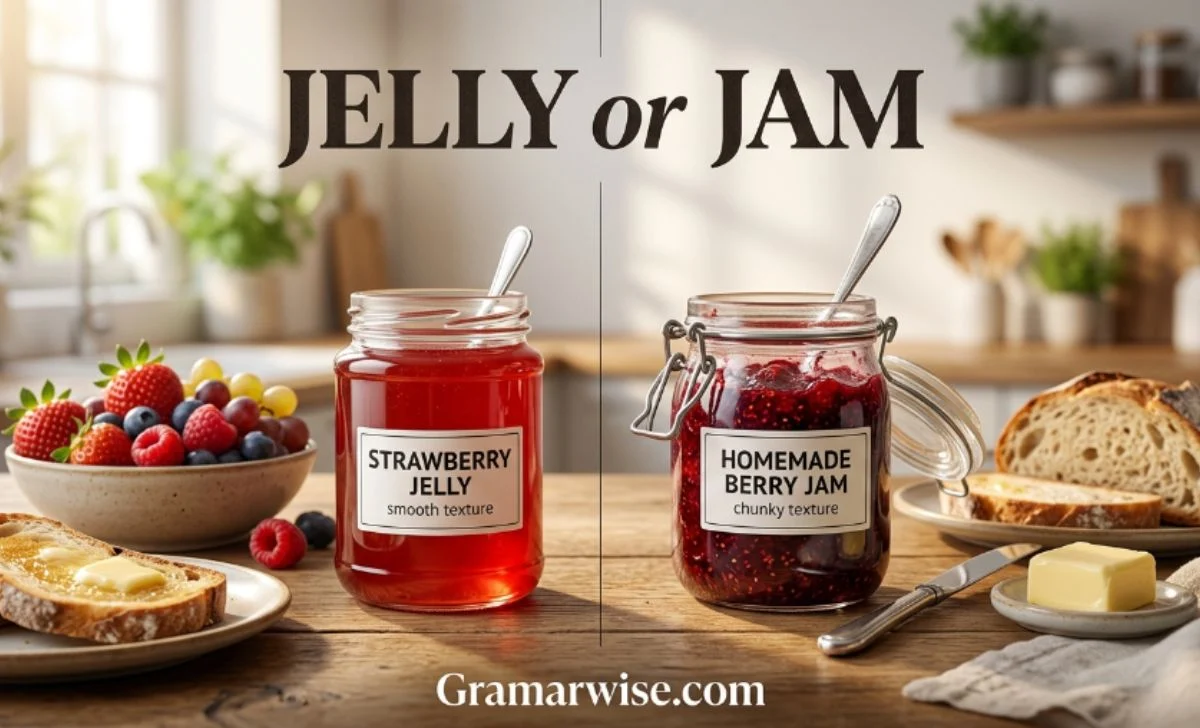
Choosing between jelly or jam seems simple until you’re standing in the grocery aisle or making a peanut butter sandwich.
Both are fruit spreads, but they are not made the same way and they do not taste or feel the same. Jelly is prepared from fruit juice, while jam contains crushed or chopped fruit.
That single difference changes the texture, flavor, and even the best way to use each one. This guide explains jelly vs jam, when to choose each, how they compare with preserves, and answers the most common questions people ask before buying or making them.
Quick Answer
If you want a short answer, neither jelly nor jam is better for everyone.
- Choose jelly if you like a smooth, seed-free spread made from fruit juice.
- Choose jam if you enjoy a thicker spread with crushed fruit and a richer fruit flavor.
The best choice depends on what you’re eating, your texture preference, and the recipe you’re making.
| Feature | Jelly | Jam |
|---|---|---|
| Made from | Fruit juice | Crushed or chopped fruit |
| Texture | Smooth and clear | Thick with fruit pieces |
| Best for | PB&J sandwiches, glazing | Toast, pastries, baking |
| Fruit chunks | No | Yes |
What Is Jelly?
Jelly is a fruit spread made by cooking fruit juice, sugar, and pectin until it forms a firm, smooth gel. Since the solid fruit is removed before cooking, the finished product has a clear appearance and spreads evenly.
Grape, apple, and mint jelly are among the most common varieties. Because jelly contains no fruit chunks, many people prefer it for sandwiches where they want a clean, even layer.
Examples
- I spread grape jelly on my peanut butter sandwich.
- Apple jelly tastes great with warm biscuits.
- Mint jelly is often served with roasted lamb.
What Is Jam?
Unlike jelly, jam is made from crushed or chopped fruit instead of only fruit juice. The fruit is cooked with sugar until it becomes thick and spreadable while still keeping small pieces of fruit.
Because more of the fruit remains in the mixture, jam usually has a fuller texture and a stronger fruit taste. Strawberry, raspberry, apricot, and blueberry jam are popular choices for breakfast and desserts.
Examples
- She spread strawberry jam on fresh toast.
- Raspberry jam is a classic filling for sponge cakes.
- Homemade peach jam tastes fresh and fruity.
Jelly vs Jam: What’s the Difference?
Although both are fruit spreads, the ingredients and preparation method create noticeable differences.
| Feature | Jelly | Jam |
|---|---|---|
| Main ingredient | Fruit juice | Crushed or chopped fruit |
| Appearance | Clear | Opaque |
| Consistency | Smooth and firm | Thick and textured |
| Fruit pieces | None | Present |
| Flavor | Light and uniform | Rich and more natural |
The easiest way to remember the difference is:
- Jelly is made from juice.
- Jam is made from fruit.
That is why jelly looks smoother, while jam has a more homemade appearance and taste.
Jelly or Jam: Which Is Better?
There is no single winner because each spread serves a different purpose.
Choose jelly if you:
- Prefer a smooth spread without fruit pieces.
- Want an even layer for sandwiches.
- Like a lighter fruit flavor.
Choose jam if you:
- Enjoy the taste of real crushed fruit.
- Prefer a thicker spread on toast.
- Want a spread that works well in baking and desserts.
For everyday breakfasts, many people choose jam for its richer fruit flavor. For classic PB&J sandwiches, jelly remains the traditional favorite because it spreads quickly and evenly.
Jam vs Jelly vs Preserves: What’s the Difference?
Jam, jelly, and preserves all begin with fruit, but they are made differently. Knowing the difference makes it easier to choose the right spread for breakfast, baking, or cooking.
| Spread | Made From | Texture | Best Uses |
|---|---|---|---|
| Jelly | Fruit juice | Smooth and clear | PB&J sandwiches, toast, glazes |
| Jam | Crushed or chopped fruit | Thick with small fruit pieces | Toast, pastries, cakes |
| Preserves | Large pieces or whole fruit | Chunkiest | Biscuits, desserts, cheese boards |
Jelly
Jelly is filtered before cooking, so it contains only fruit juice. The result is a smooth spread without seeds or fruit pieces.
Jam
Jam keeps the crushed fruit during cooking, giving it a thicker texture and a fuller fruit flavor.
Preserves
Preserves contain the largest pieces of fruit. Some varieties even include whole berries or slices of fruit, making them the closest to fresh fruit.
If you enjoy a smooth spread, jelly is the better option. If you want more fruit in every bite, choose jam or preserves.
Jelly or Jam Taste: Which One Tastes Better?
Neither spread has a better taste for everyone because they deliver different eating experiences.
Jelly has a cleaner, sweeter flavor because it is made only from fruit juice. Its smooth consistency lets the sweetness stand out without the texture of fruit pieces.
Jam tastes closer to fresh fruit. Since it contains crushed fruit, it often has a deeper flavor and a slightly less uniform texture.
For example:
- Grape jelly usually tastes smooth, sweet, and mild.
- Strawberry jam has a richer berry flavor with tiny fruit pieces.
- Raspberry jam often has a slightly tart finish that many fruit lovers enjoy.
If you like a fresh-fruit taste, jam is usually the better choice. If you prefer a silky spread with a lighter texture, jelly is likely to suit you more.
Is Jelly or Jam Better for a PB&J Sandwich
A traditional peanut butter and jelly (PB&J) sandwich is usually made with grape jelly. The smooth texture spreads easily over peanut butter and creates an even bite from edge to edge.
However, many people now make PB&J with strawberry or raspberry jam because they enjoy the stronger fruit flavor.
Choose jelly if you:
- Want the classic American PB&J.
- Prefer a smooth sandwich.
- Do not like fruit pieces.
Choose jam if you:
- Like a richer fruit taste.
- Want a homemade-style sandwich.
- Enjoy a thicker filling.
Both work well, so the choice comes down to taste rather than a strict rule.
Should You Use Jelly or Jam for Sandwiches?
Jelly and jam both work well in sandwiches, but each creates a slightly different result.
Jelly is ideal for:
- Peanut butter sandwiches
- Children’s lunchboxes
- Soft white bread
- Quick breakfasts
Jam is ideal for:
- Whole-grain bread
- Croissants
- English muffins
- Brioche and artisan bread
Jam also pairs well with cream cheese, butter, and soft cheeses, making it a popular choice beyond breakfast sandwiches.
For everyday sandwiches, there is no wrong choice. Pick the spread that matches the bread and the flavor you enjoy most.
What Does “Jelly” or “Jam” Mean in Slang?
Outside the kitchen, these words can have completely different meanings.
Jelly
In informal English, jelly is sometimes used as slang for jealous.
Example:
“You’re just jelly because she won.”
This expression is casual and appears mostly in conversations and social media posts.
Jam
The word jam has several slang meanings.
It can describe a difficult situation.
Example:
“I’m in a real jam.”
It can also mean something you really enjoy.
Example:
“This song is my jam.”
These slang meanings are unrelated to fruit spreads, so the intended meaning depends entirely on the context.
Which Spreads Better: Jelly or Jam?
If easy spreading matters most, jelly has the advantage. Its smooth texture lets it glide across bread without tearing it, making it a popular choice for soft sandwich bread and crackers.
Jam is thicker because it contains crushed fruit. It spreads well on warm toast, bagels, and croissants, but fruit pieces can make it less even on very soft bread.
Here’s a quick comparison:
| Need | Better Choice |
|---|---|
| Smooth spreading | Jelly |
| Rich fruit flavor | Jam |
| Thick topping for toast | Jam |
| Even layer on sandwiches | Jelly |
| Baking fillings | Jam |
If you’re making a classic sandwich, jelly spreads more easily. For breakfast pastries or desserts, jam often gives better flavor and texture.
Common Uses for Jelly and Jam
Although both are fruit spreads, they shine in different recipes.
Best Uses for Jelly
- Peanut butter and jelly sandwiches
- Toast and white bread
- Crackers
- Meat glazes
- Cheese platters
Best Uses for Jam
- Toast and bagels
- Croissants
- Cake fillings
- Thumbprint cookies
- Yogurt and oatmeal
- Cheesecakes
Many home bakers choose jam because the fruit adds more flavor to desserts.
Can You Substitute Jam for Jelly?
Yes. In most recipes, jam and jelly can replace each other, but the final texture may change.
For example:
- A PB&J sandwich tastes great with either spread.
- Jam can replace jelly in toast, muffins, and pastries.
- Jelly works well as a glaze because it melts into a smooth finish.
- Jam may leave small fruit pieces in sauces or fillings.
If appearance matters, jelly is usually the better choice. If flavor is the priority, jam often wins.
Popular Types of Jelly and Jam
Different fruits create different flavors. Some are better for sandwiches, while others work best in desserts.
Popular Jellies
- Grape jelly
- Apple jelly
- Mint jelly
- Red currant jelly
- Pepper jelly
Popular Jams
- Strawberry jam
- Raspberry jam
- Blueberry jam
- Apricot jam
- Peach jam
- Blackberry jam
- Cherry jam
Trying different fruits is an easy way to discover your favorite spread.
Common Mistakes People Make
People often use the terms jelly, jam, and preserves as if they all mean the same thing. While they’re closely related, they are different products.
Here are a few common mistakes:
❌ Calling every fruit spread “jelly.”
✅ Jelly is made from fruit juice only.
❌ Thinking jam and preserves are identical.
✅ Preserves contain larger pieces or whole fruit than jam.
❌ Assuming one spread is healthier than the other.
✅ Nutrition depends on the ingredients, fruit content, and added sugar—not simply whether it’s jam or jelly.
How to Choose Between Jelly and Jam
Ask yourself these simple questions before buying a jar:
- Do I prefer a smooth or textured spread?
- Am I making sandwiches or baking?
- Do I want a lighter or richer fruit flavor?
- Will I use it as a topping or a filling?
Choose jelly for smooth sandwiches, glazes, and classic PB&J.
Choose jam for toast, pastries, desserts, and recipes where real fruit flavor makes a difference.
The right choice isn’t about which spread is better overall, it’s about which one fits the meal you’re preparing.
FAQs
1. Do the British say jam or jelly?
In the UK, jam refers to the fruit spread made from crushed fruit. The word jelly usually means a fruit-flavored gelatin dessert, which Americans call Jell-O or gelatin.
2. Is PB&J made with jelly or jam?
A traditional American PB&J (Peanut Butter and Jelly) sandwich is made with grape jelly. However, many people now use strawberry, raspberry, or other fruit jams instead.
3. Is Smucker’s jam or jelly?
Smucker’s sells both jam and jelly, along with preserves, fruit spreads, and marmalades. The label on the jar tells you which product you’re buying.
4. What is the healthiest jam or jelly to eat?
The healthiest choice is usually one with more fruit and less added sugar. Look for products labeled low sugar, no added sugar, or those made with a high percentage of fruit.
5. What’s the difference between Welch’s jelly and jam?
Welch’s jelly is made primarily from fruit juice, giving it a smooth texture. Welch’s jam contains crushed fruit, making it thicker and richer in texture.
6. What jam or jelly is traditionally used in a peanut butter and jelly sandwich?
Grape jelly is the traditional choice for a classic PB&J sandwich, although strawberry jam has become a popular alternative.
7. What do Americans call jelly?
In American English, jelly means a smooth fruit spread made from fruit juice. The gelatin dessert is commonly called Jell-O, which is a well-known brand name often used generically.
8. Do the British eat peanut butter and jelly sandwiches?
They do, but they are much less common in the UK than in the United States. British people are generally more likely to use jam instead of jelly if they make a similar sandwich.
9. What is the number one selling jelly?
Welch’s Grape Jelly is widely recognized as one of the best-selling grape jellies in the United States.
10. Which is better, Smucker’s or Welch’s jelly?
Both brands are popular. Welch’s is especially known for its grape jelly, while Smucker’s offers a wider range of jams, jellies, and preserves. The better choice depends on your preferred flavor and texture.
11. Can I substitute jam for jelly?
Yes. In most recipes and sandwiches, jam and jelly can replace each other. Just remember that jam contains fruit pieces, while jelly is smooth.
12. What do Brits call Jell-O?
In the UK, the dessert Americans call Jell-O is simply called jelly.
Conclusion
Choosing between jelly or jam comes down to how you like your fruit spread. Jelly is made from fruit juice, giving it a smooth texture that’s perfect for classic PB&J sandwiches and glazes.
Jam contains crushed fruit, offering a thicker consistency and a richer fruit flavor that works well on toast, pastries, and desserts.
If you also see preserves on the shelf, remember they contain larger pieces of fruit than jam. Once you know these differences, picking the right spread becomes simple.