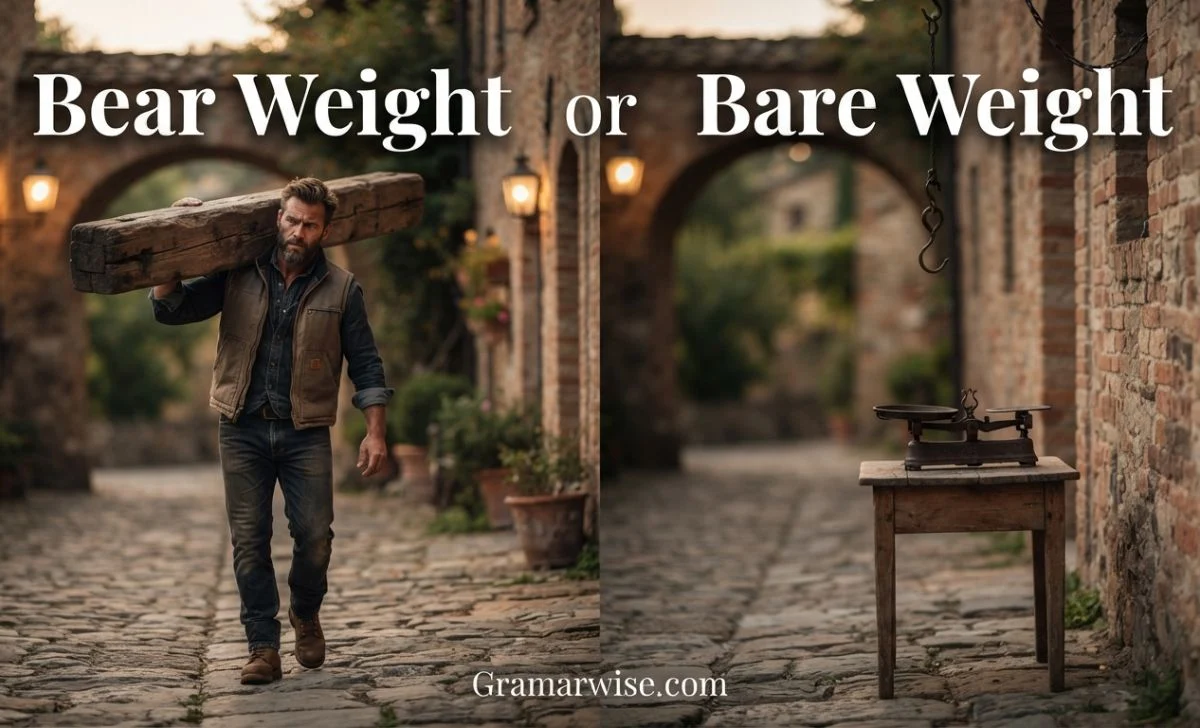
If you mean to support or carry weight, the correct phrase is bear weight.
Bare weight is not the usual phrase for this meaning. The confusion comes from the fact that bear and bare sound alike, even though they have different meanings.
Compare these sentences:
The injured foot cannot bear weight.
The shelf can bear the weight of the books.
But:
She walked in bare feet.
Here, bear relates to carrying or supporting something, while bare describes something uncovered or exposed.
Quick Answer
Use bear weight when you mean support or carry weight.
- The bridge can bear the weight of heavy vehicles.
- He cannot bear weight on his injured foot.
- This shelf should be able to bear the load.
Use bare for something that is uncovered, exposed, or minimal.
- She walked in bare feet.
- The room had bare walls.
- We only had the bare minimum.
So, when you are talking about a foot, leg, shelf, bridge, roof, or other structure supporting weight, bear weight is the correct choice.
What Does “Bear Weight” Mean?
Bear weight means to support or carry a physical load.
The phrase can describe a person’s body supporting weight or an object supporting something placed on it.
For example:
Can you bear weight on your foot?
The lower beam must bear the weight of the roof.
This table cannot bear the weight of several heavy boxes.
Bear is also used for non-physical burdens.
She had to bear the responsibility for the project.
The company agreed to bear the cost.
In these examples, bear carries the idea of taking or supporting something that is placed on you.
Bear Weight on a Foot or Leg
When you mean putting your body weight on a foot or leg, use bear, not bare.
He cannot bear weight on his injured leg.
She can now bear weight on her left foot.
The patient was unable to bear weight after the fall.
You may also see weight-bearing in medical, fitness, and rehabilitation writing:
The doctor recommended avoiding weight-bearing activity for the time being.
The exercise is designed to improve weight-bearing strength.
If you cannot bear weight on an injured foot or leg, especially after a fall or other injury, see a doctor or other qualified healthcare professional.
The spelling is always based on bear:
- bear weight
- bear the weight
- weight-bearing
- weight-bearing exercise
Not:
- bare weight
- bare the weight
- weight-baring
Is “Bare Weight” Correct?
Not when you mean supporting or carrying weight.
If you write:
The bridge can bare the weight of the trucks.
you should change bare to bear:
The bridge can bear the weight of the trucks.
If you mean the weight of something without its contents, equipment, or load, clearer terms are usually empty weight, unloaded weight, or another specific term suited to the context.
So don’t use bare weight as a substitute for bear weight.
Bear vs. Bare in Everyday Use
Although these words sound alike, their meanings are easy to separate in common phrases.
| Word | Common use | Example |
|---|---|---|
| bear | carry or support | The bridge can bear the load. |
| bear | tolerate or endure | I can’t bear the pain. |
| bare | uncovered | He walked in bare feet. |
| bare | minimal | We had the bare minimum. |
| bare | reveal or expose | She bared her feelings. |
This difference explains why bear weight, bear the pain, and bear with me use bear, while bare feet and bare walls use bare.
Bear the Pain or Bare the Pain?
The correct phrase is bear the pain.
Here, bear means to tolerate or endure something unpleasant.
She had to bear the pain until help arrived.
I cannot bear the pain any longer.
He found it difficult to bear the pressure.
The same idea appears in expressions such as bear the cost, bear the burden, and bear the consequences.
So if you mean “endure,” use bear.
“I Can’t Bear It” or “I Can’t Bare It”?
The correct expression is I can’t bear it.
I can’t bear it anymore.
She couldn’t bear the noise.
He could not bear the thought of leaving.
In these sentences, bear means tolerate or endure. Bare would not have that meaning.
This is one of the easiest ways to remember the spelling: if you could replace the word with tolerate, use bear.
“Bear With Me” or “Bare With Me”?
The correct expression is bear with me.
Please bear with me while I check the details.
Bear with me means please be patient with me.
The phrase uses bear, not bare. So:
- Bear with me. ✓
- Bare with me. ✗ when you mean “be patient with me”
Because the two words have the same pronunciation, this is a common spelling mistake.
Bear Down or Bare Down?
The standard expression is bear down.
It can mean to apply pressure or make a strong effort.
She had to bear down and finish the difficult task.
The team had to bear down to meet the deadline.
Bare down is the wrong spelling when you mean this expression.
How to Remember Bear and Bare
A simple memory trick is to connect bear with a burden.
If something is being carried, supported, or endured, think bear:
bear weight
bear the pain
bear the cost
If something is uncovered or exposed, think bare:
bare feet
bare walls
bare hands
You don’t need to memorize every expression separately. Focus on what the sentence means.
Common Mistakes
| Incorrect | Correct |
|---|---|
| The injured foot cannot bare weight. | The injured foot cannot bear weight. |
| I can’t bare it. | I can’t bear it. |
| Bare with me, please. | Bear with me, please. |
| She couldn’t bare the pain. | She couldn’t bear the pain. |
| Weight-baring exercise | Weight-bearing exercise |
| The bridge can bare the load. | The bridge can bear the load. |
| Bare down and finish the task. | Bear down and finish the task. |
Most of these mistakes happen because the words sound identical. Checking the meaning before choosing the spelling usually solves the problem.
FAQs
Is it bear weight or bare weight?
Bear weight is correct when you mean to support or carry weight. Bare weight is not the standard phrase for this meaning.
Can you bear weight on your foot?
Yes. Bear weight on your foot means to put or support body weight on that foot.
Is it bear the pain or bare the pain?
The correct phrase is bear the pain because bear can mean tolerate or endure.
Is it bear with me or bare with me?
The correct expression is bear with me, meaning “please be patient with me.”
Is weight-bearing spelled with bear or bare?
It is spelled weight-bearing, with bear. The word comes from the verb bear, meaning to support or carry.
Is it bear down or bare down?
The standard expression is bear down. Bare down is the incorrect spelling when you mean to apply pressure or make a strong effort.
How can I remember the difference between bear and bare?
Think of bear when something is carried, supported, or endured. Think of bare when something is uncovered, exposed, or minimal.
Conclusion
When you mean to support or carry weight, use bear weight. When you mean something is uncovered or exposed, use bare.
The key is to focus on meaning rather than pronunciation: bear relates to carrying or enduring, while bare relates to being uncovered or exposed.