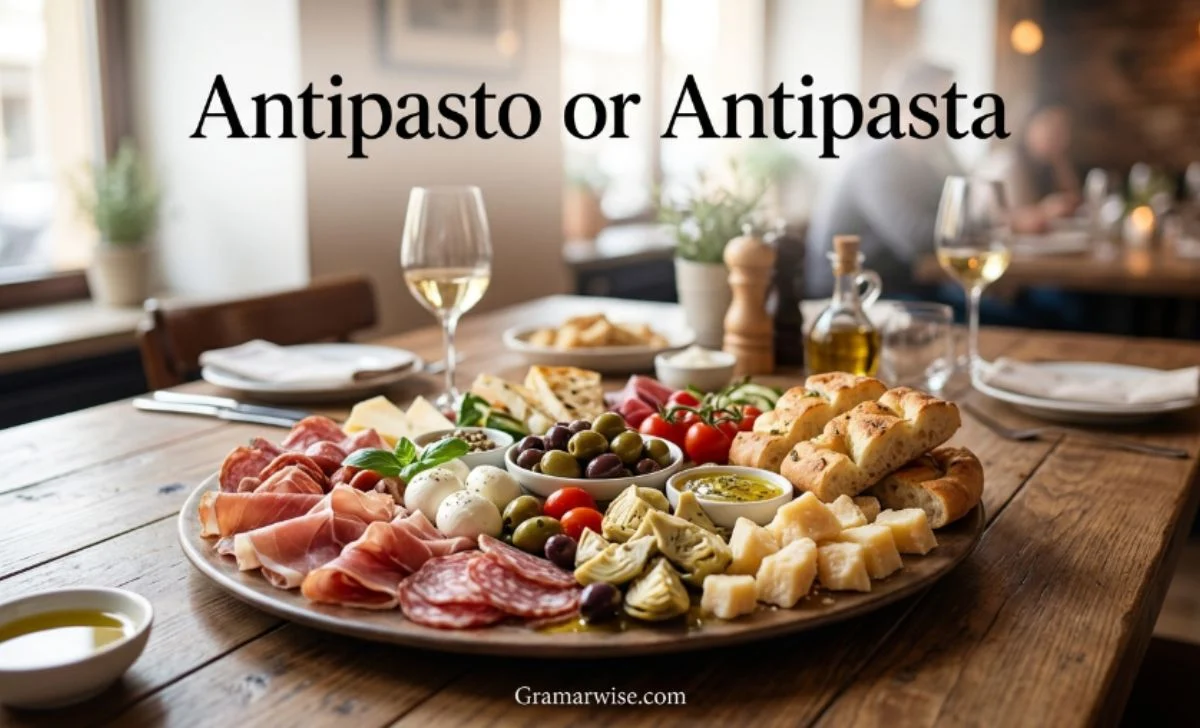
Italian food has introduced many beautiful words into English, but some of them create confusion because their spelling and meaning are not always obvious.
One common example is antipasto or antipasta. Many people assume that antipasta is the correct spelling because it sounds like it relates to Italian pasta. However, that assumption is incorrect.
The correct culinary term is antipasto, which refers to a traditional Italian appetizer served before the main meal.
The word comes from Italian dining culture and has nothing to do with pasta. Understanding the difference between these terms helps you use Italian food vocabulary correctly, whether you are reading a restaurant menu, writing about cuisine, or ordering at an Italian restaurant.
Quick Answer
Antipasto is the correct Italian word for a starter or appetizer served before the main meal.
Antipasta is not the correct term and is a common mistake caused by confusion with the word pasta. The plural form of antipasto is antipasti.
Antipasto vs. Antipasta at a Glance
| Feature | Antipasto | Antipasta |
|---|---|---|
| Correct term | ✅ Yes | ❌ No |
| Origin | Italian | Incorrect variation |
| Meaning | Before the meal; Italian appetizer | No standard culinary meaning |
| Word type | Noun | Not a recognized Italian food term |
| Related word | Antipasti (plural) | Often confused with pasta |
| Usage | Restaurant menus, Italian cuisine | Common spelling mistake |
The easiest way to remember:
Antipasto = before the meal
Antipasta = a mistaken form created by confusing “pasto” with “pasta”
What Does “Antipasto” Mean?
Definition of Antipasto
Antipasto is an Italian word that means a dish served before the main meal. It is traditionally the first course of an Italian meal and is designed to prepare the appetite for the dishes that follow.
The word comes from two Italian parts:
- Anti = before
- Pasto = meal
So, antipasto literally means “before the meal.”
It does not mean “before pasta.” The word pasto refers to a meal, while pasta refers to the famous Italian food made from dough.
The Role of Antipasto in Italian Dining
In traditional Italian cuisine, meals are often structured into several courses:
- Antipasto – starter or appetizer
- Primo – first main course, often pasta, rice, or soup
- Secondo – main protein dish such as meat or fish
- Contorno – side dish
- Dolce – dessert
Antipasto comes at the beginning of this dining experience. It is meant to introduce flavors, stimulate appetite, and create a social dining experience.
Unlike a quick snack, traditional antipasto is carefully prepared and often includes a combination of different ingredients.
What Foods Are Included in Antipasto?
An antipasto dish can include many different Italian ingredients depending on the region and restaurant.
Common antipasto ingredients include:
Cured Meats
Italian cured meats are a popular part of antipasto platters.
Examples:
- Prosciutto
- Salami
- Mortadella
- Bresaola
These meats add rich flavors and are often served in thin slices.
Italian Cheeses
Cheese is another important element of antipasto.
Common choices include:
- Mozzarella
- Parmesan
- Pecorino
- Provolone
A traditional antipasto platter may combine different cheeses with meats and vegetables.
Vegetables and Olives
Many antipasti include:
- Marinated olives
- Roasted peppers
- Artichokes
- Mushrooms
- Grilled vegetables
- Sun-dried tomatoes
These ingredients add freshness and balance to the dish.
Bread and Small Bites
Antipasto may also include:
- Bruschetta
- Crostini
- Focaccia
- Italian bread
These items are often served with olive oil, herbs, or spreads.
Why Is “Antipasta” Incorrect?
The confusion between antipasto and antipasta happens because many people connect the word with Italian pasta.
Since pasta is one of the most famous Italian foods, it seems logical that “antipasta” might mean something related to food before pasta.
However, this interpretation is wrong.
The correct breakdown is:
Antipasto
= Anti + Pasto
= Before + Meal
Not:
= Anti + Pasta
= Before + Pasta ❌
The word has no connection with pasta dishes.
Is “Antipasta” a Real Word?
In standard Italian and English food terminology, antipasta is not considered the correct word.
You may see antipasta used in:
- online discussions
- informal writing
- social media posts
- menus with spelling mistakes
However, it is usually just a misunderstanding of the original Italian term.
Professional restaurants, chefs, food writers, and culinary experts use antipasto.
Example:
❌ We ordered an antipasta platter.
✅ We ordered an antipasto platter.
Why Do People Say Antipasta?
The mistake happens mainly because of familiarity.
Most English speakers already know the word pasta, which is strongly associated with Italian cuisine. When they hear antipasto, they may unconsciously replace pasto with the more familiar word pasta.
This is a common type of language mistake called folk etymology, where people change an unfamiliar word to make it seem more understandable.
Similar examples exist in English where people modify words because they sound more familiar.
In the case of Italian cuisine:
- pasta = a type of food
- pasto = a meal
They look similar but have different meanings.
Antipasto vs. Antipasti: Understanding the Plural
A common question is whether the plural form is antipastos or antipasti.
The correct Italian plural is:
Antipasto → Antipasti
| Form | Meaning | Example |
|---|---|---|
| Antipasto | One appetizer course/item | This restaurant serves a delicious antipasto. |
| Antipasti | Multiple appetizer items | We shared several antipasti before dinner. |
In English, you may sometimes see antipasti used as a general term for a selection of Italian appetizers.
Example:
The restaurant offers a large antipasti platter with cheeses, meats, and vegetables.
Antipasto vs. Appetizer: What Is the Difference?
Many people use antipasto and appetizer as if they mean exactly the same thing, and in casual conversation, that is often acceptable. However, there is a small difference between the two terms.
An appetizer is a general English word for any small dish served before the main course. It can describe food from any cuisine.
Examples:
- soup before dinner
- spring rolls at an Asian restaurant
- cheese bites at a party
- small seafood dishes
Antipasto, on the other hand, specifically refers to an Italian-style appetizer that follows traditional Italian dining customs.
In simple terms:
| Feature | Antipasto | Appetizer |
|---|---|---|
| Origin | Italian | General English term |
| Cuisine connection | Italian food | Any cuisine |
| Meaning | Traditional Italian starter | Any small dish before a meal |
| Examples | Prosciutto, olives, cheese, bruschetta | Any pre-meal dish |
All antipasti are appetizers, but not all appetizers are antipasti.
For example:
- A plate of Italian cured meats, olives, and mozzarella = antipasto
- A bowl of soup before dinner = appetizer, but not antipasto
How to Pronounce Antipasto Correctly
The correct pronunciation of antipasto is:
/ˌæn.tɪˈpæs.toʊ/
It sounds like:
an-ti-PAS-to
The stress is usually placed on the third syllable:
an-ti-PAS-to
A common mistake is pronouncing it like:
❌ an-ti-PAS-ta
The ending should sound like “to”, not “ta.”
Learning the pronunciation can also help you remember the correct spelling because the word ends with -o, just like the original Italian term.
Common Mistakes to Avoid
Mistake 1: Writing “Antipasta” on Menus or Articles
❌ The restaurant serves a delicious antipasta platter.
✅ The restaurant serves a delicious antipasto platter.
Since antipasta is not the correct culinary term, professional writing should always use antipasto.
Mistake 2: Thinking Antipasto Means “Before Pasta”
Many people believe:
Antipasto = before pasta
This is incorrect.
The correct meaning is:
Antipasto = before the meal
The word comes from pasto, meaning meal, not pasta.
Mistake 3: Using “Antipastos” as the Plural
Because English often adds -s to make plurals, some people write:
❌ Two antipastos were served.
Although this may appear in informal English, the traditional Italian plural is:
✅ Two antipasti were served.
Mistake 4: Confusing Antipasto With a Specific Dish
Antipasto is not one single recipe.
It describes a category of Italian starters that may include many different foods.
For example, an antipasto platter may contain:
- cured meats
- cheeses
- olives
- vegetables
- seafood
- bread
The exact ingredients vary depending on the region and restaurant.
Real-Life Examples of Antipasto Usage
At an Italian Restaurant
We ordered an antipasto platter with prosciutto, mozzarella, olives, and roasted vegetables.
Here, antipasto refers to the collection of Italian starters served before the main meal.
In Food Writing
Traditional Italian antipasti highlight fresh ingredients and regional flavors.
Here, antipasti is used correctly as the plural form.
In Everyday Conversation
Let’s share some antipasto before ordering our pasta dishes.
This sentence shows the traditional order of an Italian meal: starter first, pasta later.
On a Restaurant Menu
You may see items listed as:
- Antipasto platter
- Mixed antipasti
- Italian antipasti selection
- Classic antipasto board
These are all common and correct uses.
The Cultural Importance of Antipasto in Italian Cuisine
Antipasto is more than just an appetizer. In Italian culture, food is often connected with social interaction, family gatherings, and enjoying time together.
A traditional antipasto course encourages people to:
- share food
- begin conversations
- enjoy different flavors
- prepare for the main meal
Regional Italian cuisine also influences antipasto ingredients.
For example:
- Coastal regions may include seafood-based antipasti.
- Southern Italy often features vegetables, olives, and local cheeses.
- Northern regions may include cured meats and rich cheeses.
This variety is why antipasto can look different from one Italian region to another.
FAQs
1. Is antipasta a real word?
No. Antipasta is not the correct Italian food term. It is a common mistake caused by confusion with the word pasta. The correct word is antipasto.
2. What does antipasto mean in Italian?
Antipasto means “before the meal” in Italian. It refers to a starter course served before the main dishes.
3. What is the plural of antipasto?
The traditional Italian plural of antipasto is antipasti.
Example:
The restaurant offers several antipasti options.
4. Is antipasto the same as an appetizer?
Antipasto is a type of appetizer, but the terms are not exactly identical. Appetizer is a general term, while antipasto specifically refers to Italian starters.
5. Why do people say antipasta?
People often say antipasta because they confuse pasto (meal) with pasta (Italian food). The similarity between the words causes this common mistake.
6. What foods are included in antipasto?
Antipasto may include cured meats, cheeses, olives, roasted vegetables, bruschetta, seafood, and other Italian starters.
7. How do you pronounce antipasto?
Antipasto is pronounced:
an-ti-PAS-to
/ˌæn.tɪˈpæs.toʊ/
The final sound is “to,” not “ta.”
8. Is antipasto Italian?
Yes. Antipasto is an authentic Italian culinary term that comes from traditional Italian dining culture.
Final Verdict
The correct term is antipasto, not antipasta. Although both words may look similar, they have completely different meanings. Antipasto comes from Italian and means “before the meal,” referring to a traditional starter course that may include cured meats, cheeses, olives, vegetables, and bread.
The confusion happens because many people connect the word with pasta, one of Italy’s most famous foods. However, pasto means meal, while pasta refers to the familiar Italian dish.
Remember this simple rule:
Antipasto comes before the meal, not before pasta.
Using the correct term will help you understand Italian menus, write accurately about food, and communicate more confidently.